
A symphony of wellness
.A symphony of wellness denotes a metaphor that suggests wellness is composed of a mulltiple dimensions( emotional, physical, occupational, social, spiritual, intellectual, environmental, and financial. that unite and build upon each other to produce a whole.
In the pursuit of promoting optimised well being, this article looks how a biopsychosocial apporach to massage can help therapists provide a harmonised and holistic apporach to promoting a symphony of wellness that is unique to each client.
Mind- Body connection

Instead of the mind and body being two isolated entities, they are connected through networks of communication between the brain and other systems that form a complex, dynamic, and interactive relation with one another.
This bi-directional connection is based on a relationship between emotional integrity and physical health and wellbeing and the profound impact each one has on the other. This bond is also influenced by social factors such as personal relationships, family, culture, work, money and housing.
The mind body connection can be discussed in relation to the biopsychosocial model of change.
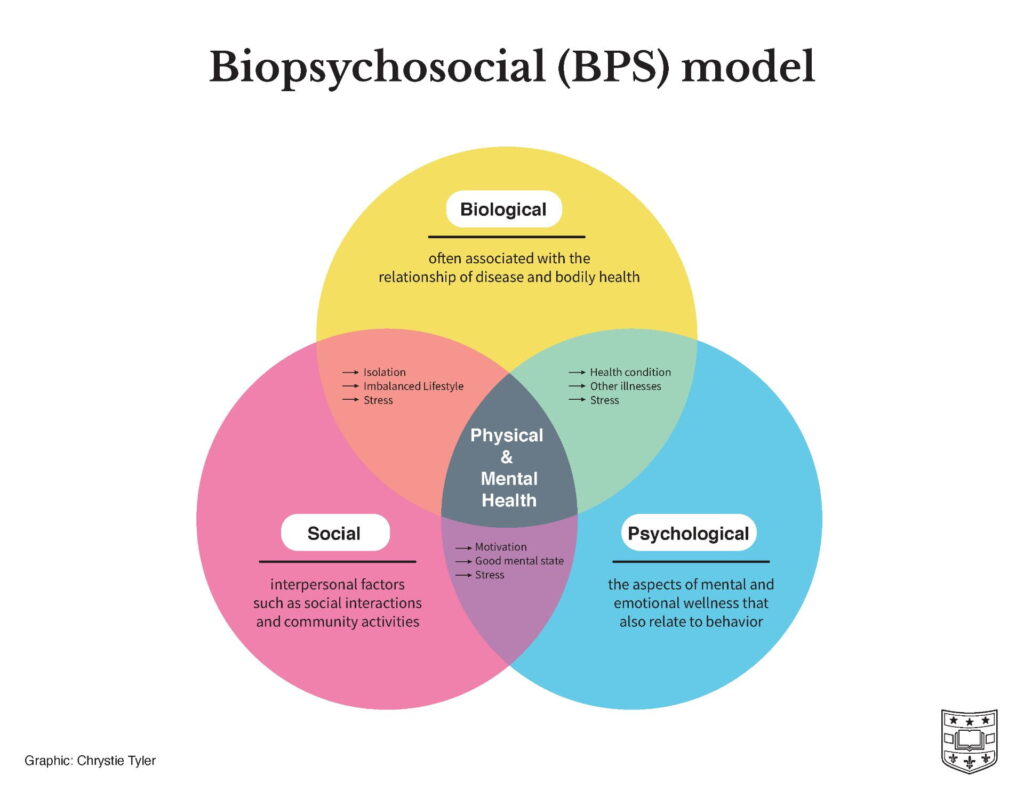
The Biopsychosocial model was first conceptualised by George Engel in 1977, suggesting that to understand a person’s medical condition it is not simply the biological factors to consider, but also the psychological and social factors.
In this sense, a biopsychosocial approach to healthcare focuses on comprehending the interactions of multiple systems (pshyco/physical/social) and how these elements interact to put into context the interconnected and multidirectional interaction between: physiology, thoughts, emotions, behaviors, culture, and beliefs.
Subsequently, a biopsychosocial stance, advocates that people are more than just there biology and by anaylsing multidimensial factors it is possible to determine the totality of illness and its effects on the body and mind.
Incorporating a biopsychosocial model in to massage therapy
By adopting principles of this particular model, a massage therapist can use an integrative approach that addresses the cumulative effect of stress on physical health, the role of the mind in managing pain, and the impact of social connections on a person’s journey.
In this sense, instead of projecting personal opinions on to a client, an adoption of a biopshychosocial framework makes it is possible to adapt to change within each clinical encounter and increases the probability of a positive therapeutic outcome.
The therapist can achieve this by conducting an initial assesment based on interview principles using active listening, open questions and patient validation, all which contribute to a better understanding of the patients’ experience and helps to build a strong therapeutic alliance which is important for successful rehabilitation outcomes.
Conclusion
A biopsychosocial framework helps put into context the interconnected and multidirectional interaction between: physiology, thoughts, emotions, behaviors, culture, and beliefs. As mentioned above massage therapist can use this in practice, to take into consiederation biological, psychological, and social elements that interplay and enhance health and well-being